📰 After the Rebellion comes the Revolution
I was interviewed by Sabrina Weiss for the Swiss magazine, Republik, about my recent shift from civil disobedience to community assemblies. The original article was published in German on their website. An English translation is shared below.
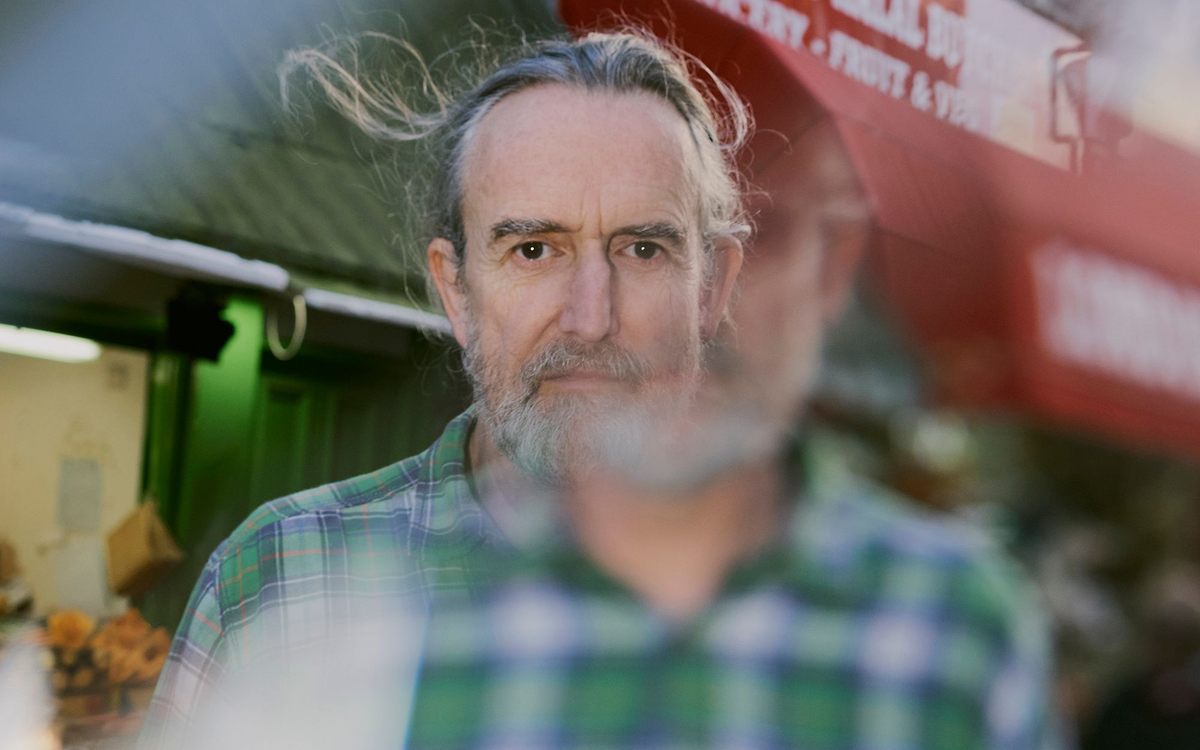
Roger Hallam stops in front of an inconspicuous shop in London, takes a breath, and pushes the door open. For a man who once brought entire streets to a standstill and captivated tens of thousands with his speeches, he seems surprisingly shy. He says he never liked knocking on doors and bothering people. And yet he is doing it again today.
Hallam is tall and lanky, filling the room without dominating it. At the counter of the optician’s shop, he briefly explains what it’s about and asks for a few pounds. Then he moves on – to the hairdresser, the snack bar, the corner shop. Some recognise his voice from their phones. But they don’t connect the polite stranger with the co-founder of Extinction Rebellion or Just Stop Oil. Not with one of Europe’s most influential campaigners, who made headlines with climate protests and ended up in prison in 2024 – for a motorway blockade he hadn’t even taken part in himself.
Today, Hallam moves through London without a police escort or television cameras, carrying nothing but a stack of flyers and a determination to change politics in order to stop the climate crisis – albeit in a new way.
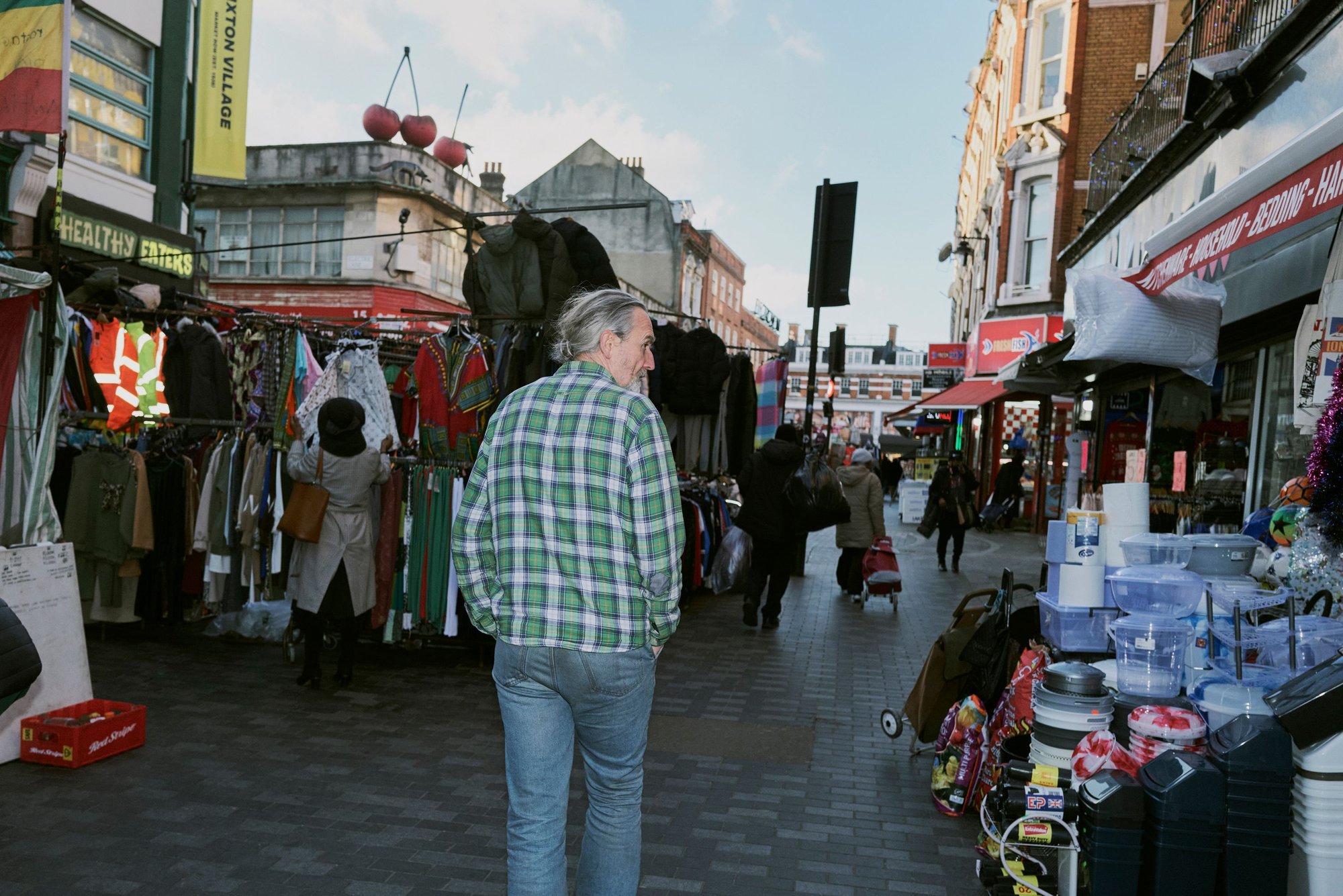
The donations he is asking for are intended to fund citizens’ assemblies in south London. After his release from prison, Hallam spent ten weeks going door to door with colleagues, asking around 2,000 residents about their biggest concerns. Eighty percent mentioned the visible homelessness in the area. Many affected people fall through every safety net, their situation worsened by drug addiction or mental illness. Even on this November evening, several homeless people are crouched outside the Underground station, while others walk along the busy shopping street.
Together with local residents, Hallam has developed a new campaign and wants to challenge the local council – calmly, methodically, almost unspectacularly. At least for now. To understand why he is now campaigning for homeless people and what this has to do with the climate crisis, we need to take a step back.
Hallam wants to ensure that homeless people receive better support. He is actually currently living in temporary accommodation himself: since his release from prison in August, Hallam has to report punctually every evening to his probation accommodation. He is only allowed to leave the house during the day, and at noon he has an appointment with his probation officer. Every step he takes is electronically monitored. He is only partially free. And yet he is already working on his next mass movement.
Why doesn’t Roger Hallam simply stop?
 John Lubbock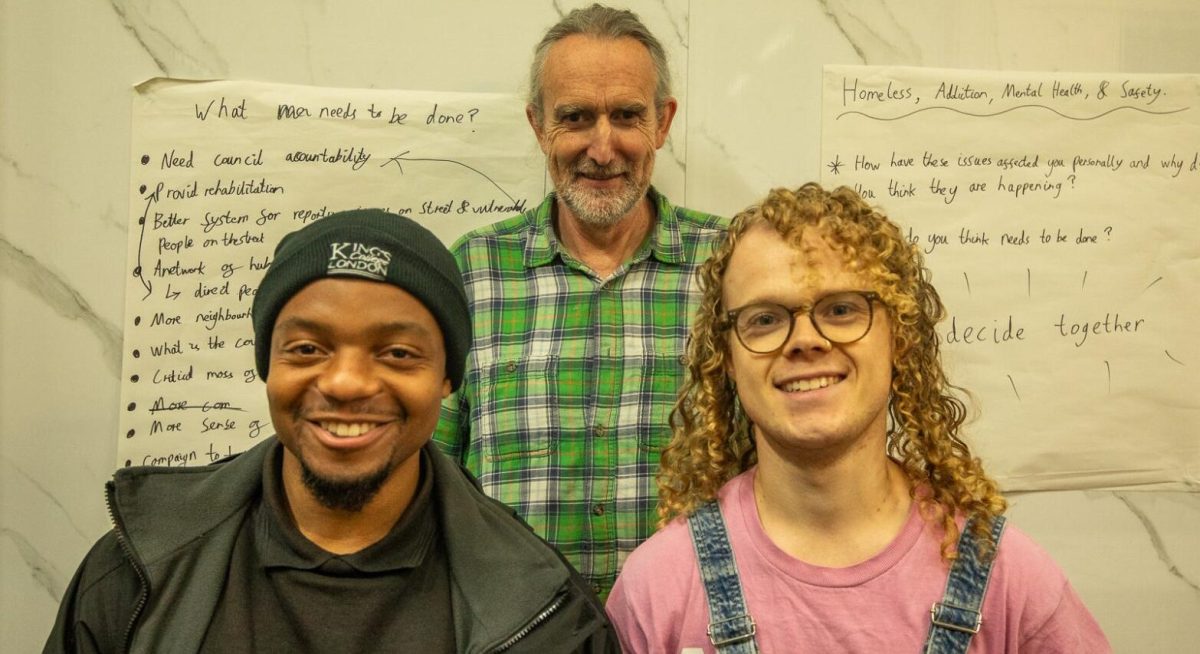
A fresh start after prison
I meet Hallam before he sets off on his evening fundraising round. He is sitting in the living room of a narrow terraced house belonging to a friend. It is so close to the probation hostel that Hallam can work here for a few hours each day. His grey hair is tied into a small bun at his neck, the electronic ankle tag hidden beneath his jeans.
Hallam is serving a four-year prison sentence for civil disobedience, probably the longest ever imposed on a climate activist in Europe. After 13 months, he was released early under strict probation conditions.
I am expecting the Hallam the media have portrayed: a man who throws around figures and apocalyptic scenarios, who picks apart journalists’ questions rather than answering them. I also anticipate mistrust – after all, a journalist contributed to his arrest. But when I see the 59-year-old sitting on the black sofa, he appears quite different: slightly slumped, his hands wedged between his thighs, his gaze attentive and kind.
«What was it like to spend 13 months in prison?» I ask.
Hallam pauses. «For me, it was a very enriching experience,» he says.
The remark is surprising and at the same time reveals a side of Hallam that the public barely knows: the academic who lives in books. In his single cell, he devoured almost a hundred works of social theory and philosophy and wrote three of his own, which he plans to publish in 2026.
When protesters block roads, disrupt airport operations, or smear works of art and facades with soup or paint, they are engaging in civil disobedience. They want to attract attention and provoke political responses. In the face of the climate crisis, Hallam still sees such non-violent actions as a moral duty.
Would he break the law again for that cause? He hesitates. One wrong word could land him back behind bars for another two years.
And yet he cannot let go. He wants to mobilise the masses again – this time less through disruptive actions and more through a new form of democracy. As an activist? No, that label is too narrow, he says. Activism merely patches up the edges of an existing system. His aim is to change the system itself.
His hands now rest loosely on his thighs, his voice resolute: «I prefer to call myself a revolutionary. Not in a performative, macho, romantic sense, but in a technical one.»
What exactly does this man want?
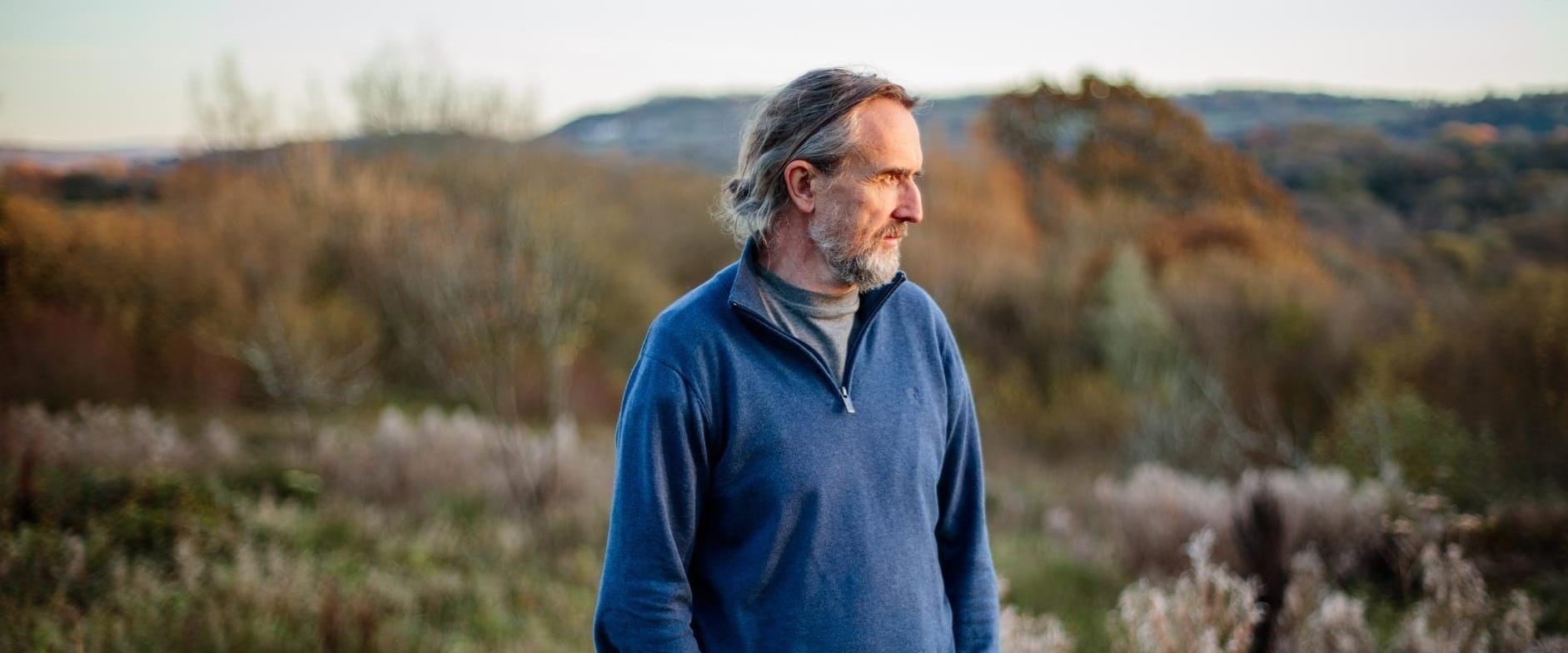
From organic farmer to agitator
Roger Hallam grew up in the north of England, shaped by parents who model responsibility and moral action: his father is a manager at a co-operative factory, his mother preaches in a Methodist church. While other young people are enjoying their newly won freedom, Hallam becomes politically active. In the late 1980s, he walked the streets with placards calling for a future without nuclear weapons. At the same time, he begins to test the limits of the law: for instance, he sprays peace messages onto a Ministry of Defence building. Barely 21, he has already spent three short stints in prison – back then, he got off relatively lightly, with sentences of up to two weeks, as he says.
Hallam turns to the fight against climate change and those responsible for it after experiencing its effects first-hand. In the summer of 2007, torrential rain destroyed the vegetable fields on his organic farm in Wales, which he had run for two decades. He speaks of a financial loss of around 100,000 pounds. Hallam lays off his 25 employees, gives up the farm, and from then on works on other holdings with polytunnels that offer better protection against extreme weather events.
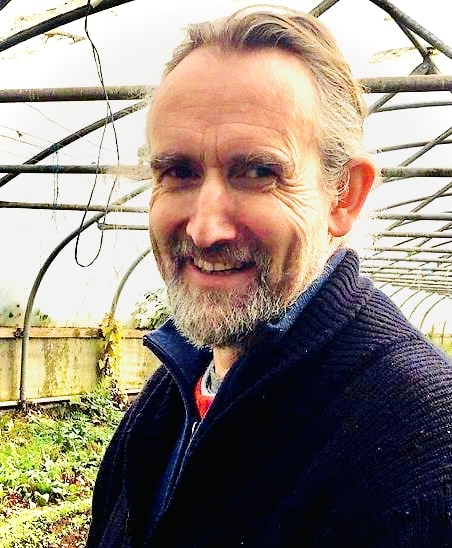
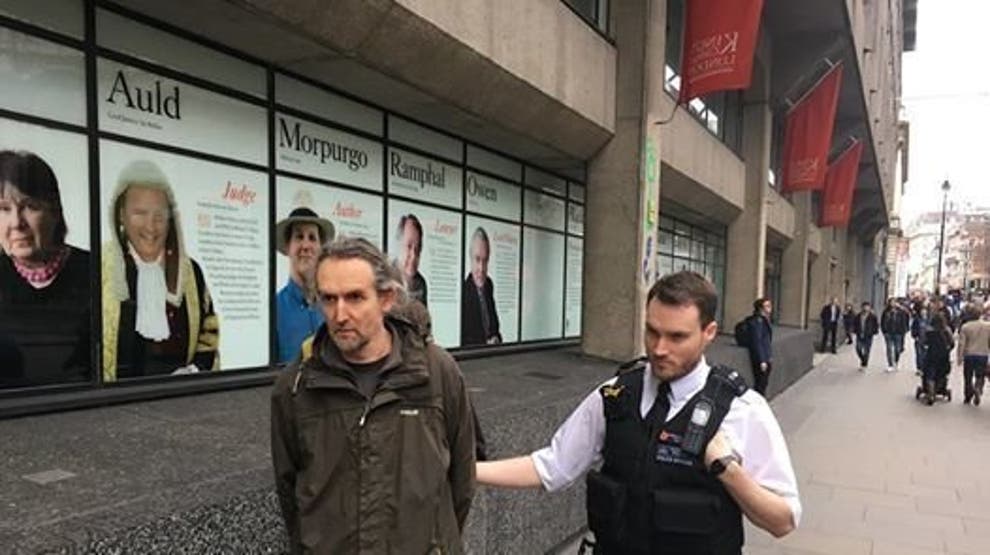
At the same time, he continues his studies in politics and, after 2015, moves to London to pursue a PhD on civil disobedience at King’s College. There, he immerses himself in social science literature and the theories of radical social movements. He studies Gandhi’s work in India, that of Martin Luther King in the United States, and the research of political scientists such as Erica Chenoweth. At Harvard Kennedy School, Chenoweth examined non-violent protest movements over a century and arrived at a simple but far-reaching conclusion: if around 3.5 per cent of the population rise up non-violently, they can overthrow authoritarian power structures. This rule of thumb later became the credo of many climate groups.
This knowledge turns Hallam into a strategist – and once again brings him into conflict with the law. In 2017, he and a colleague spray two listed university buildings with water-soluble paint.
At the time, Hallam is still able to invoke climate change in his defence: before the jury, he explains that he had sprayed slogans such as «Divest from oil and gas» or «Out of time» onto the walls in order to pressure the university to withdraw its roughly 13 million pounds worth of investments in fossil fuels. The jury considers the action proportionate and acquits both. The university also announces that it will divest from these investments by 2020 – an initial success that confirms Hallam’s belief: civil disobedience can have an impact.
Hallam never submits his doctoral thesis, instead turning to organising. He advises climate activists and, over the course of months, develops strategies with a small group intended to shake the entire country. Writing letters to MPs, donating money to NGOs, and taking part in demonstrations no longer seem effective enough. They are striving for a rebellion – something visible, loud, and impossible to ignore.
On 31 October 2018, the group first appears in public as Extinction Rebellion (XR). Around 1,000 people gather in Parliament Square in London to launch the movement. Greta Thunberg, then 15 years old and just beginning to skip school for the climate, travels from Sweden to deliver a speech.
Hallam emerges as the strategic brain and also steps in front of the cameras to reveal the plans of the new movement: mass civil disobedience, disruptions on a scale that would force the «political class» to finally take the climate crisis seriously. He calls on viewers to take to the streets two weeks later on «Rebellion Day» – adding with a laugh, «It’ll be fun.»
The timing is crucial. Extinction Rebellion launches just weeks after the Intergovernmental Panel on Climate Change (IPCC) warned in a special report that the world had only until 2030 to meet the 1.5-degree target set by the Paris climate agreement. Against this backdrop, the activists unfurl their banner in Parliament Square for the first time, bearing a clear message: «12 years to save the Earth». Anyone encountering the urgency of climate change for the first time could hardly fail to be alarmed.
The rebellion begins
In mid-November, «Rebellion Day» comes. Hallam and the other XR members guide around 6,000 people across five central bridges over the Thames. There, they sit in the middle of the roads, sing, chant slogans – and clearly enjoy themselves. In doing so, they block traffic for hours. The police are less entertained and arrest several dozen participants.
Five months later, in April 2019, Extinction Rebellion stepped things up even further. The activists now occupy London’s most popular shopping street, where actress Emma Thompson stands in a pink boat with a microphone. She praises the new movement and calls the gathered crowd «a small island of reason». For ten days, the activists disrupt city traffic and everyday life with ever-changing actions. Some glue themselves to the entrance of the stock exchange, others to trains, leading to chaotic scenes with frustrated commuters, some of whom forcibly drag and even strike them.
This time, the police arrested over 1,100 people. Each time an activist is led away or carried off, the others cheer and applaud. For Extinction Rebellion, mass arrests are a means to an end: those who bear the consequences show how serious they are, and earn solidarity – much like the suffragettes of the early 20th century. These radical women’s rights campaigners smashed windows, set fire to unoccupied churches and libraries, and went on hunger strikes. The authorities’ harsh responses, including forced feeding in prisons, backfired publicly. The British Parliament ultimately passed a law granting women the right to vote.
Extinction Rebellion aims for the same effect: mass arrests and the resulting court cases are intended not only to keep their demands in the headlines, but also to overload the police and prisons, thereby forcing political responses.
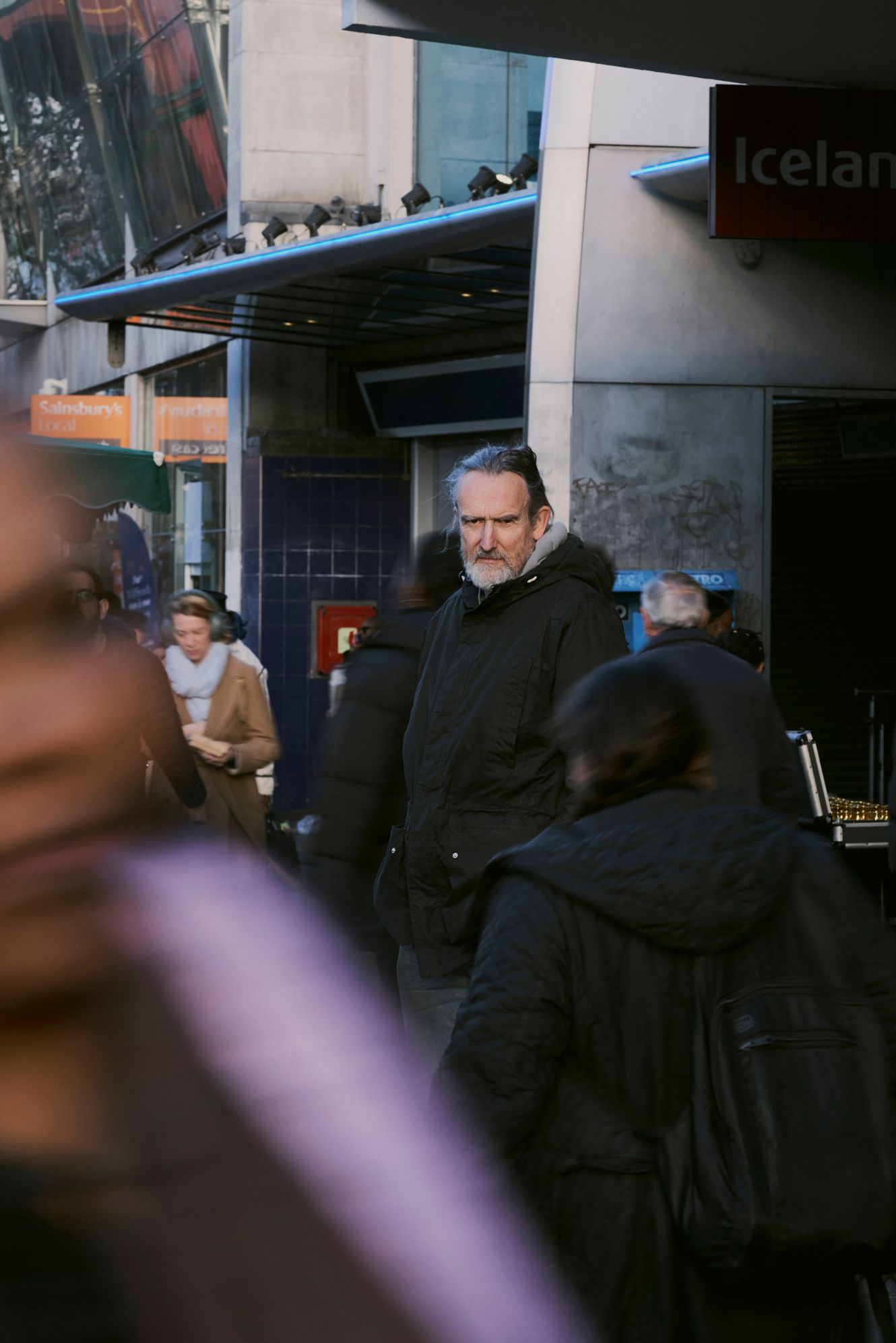
Graeme Hayes, head of the department of sociology and policy at Aston University in Birmingham, has been observing civil disobedience since the early 2000s. He recognises Extinction Rebellion’s rapid growth but points to strategic limits. In a video call, Hayes explains that activists often adopt tactics that worked in a particular context without adapting them. Erica Chenoweth’s 3.5-per-cent rule, for example, is difficult to apply to the climate movement because it studied successful pro-democracy movements in authoritarian states. Hayes says: «That’s different from a climate movement in a liberal democracy.»
Still, Extinction Rebellion’s approach seems to work at first. Politicians can no longer ignore the protests. In May 2019, the UK Parliament declares a climate emergency at the proposal of the Labour Party, fulfilling one of XR’s three key demands. In Switzerland and elsewhere, people are inspired, set up XR chapters, and become active themselves. Meanwhile, Greta Thunberg rises to an icon, and the school strikes she inspired grow explosively. Millions take to the streets worldwide, making 2019 the year of climate protest.
Although Extinction Rebellion sees itself as a decentralised, leaderless movement, Hallam acts as one of its most prominent faces. Unfazed by crowds and cameras, he relies on charm, provokes with sharp analogies, and does not sugarcoat radical ideas or grim future scenarios. He does not see the climate crisis merely as an ecological problem – he interprets it as a harbinger of societal collapse: heat, hunger, wars, billions dead if global politics continues as usual.
Robin Boardman, who dropped out of university at 21 to co-found Extinction Rebellion, describes Hallam: «Roger’s blunt honesty resonates with a particular minority – the people who are willing to act on the truth when they finally hear it spoken without euphemism.» In social movements, this engaged minority is precisely the one that drives change.
Hallam’s prophetic messages still resonate today, even though he is no longer active in Extinction Rebellion. In our conversation in the London living room, he warns that the world is on a «suicide course». He speaks of global warming far above 2 degrees and of the «global elites» who systematically violate human rights and destroy the livelihoods of countless generations. «This may sound like a joke now,» he says, «but later people will look back on our generation as we look back on the 1930s, on the Nazis – a generation incapable of empathy and of taking responsibility for others.»
Hallam appears tired, worn out. He would much rather talk about literature, spirituality, and the dangers of neoliberalism – his favourite topics. But I want to know how he thinks about resistance in the climate crisis and what it looks like in practice. He wants me to understand how he views the world in order to grasp how he intends to change it. He abstracts, explaining the links between political failure and social breakdowns.
He supports his arguments with historical examples, social research, and moral principles, showing how effective civil disobedience and radical movements can be. He says: «Most radical social change is brought about by those who do not care whether they succeed or fail – they act because it is an ethical or spiritual thing to do.»
The fracture
Hallam approaches resistance like a start-up founder a product idea: fast, disruptive, with no regard for existing structures – essentially: move fast and cause trouble. With Extinction Rebellion and later groups, he is constantly experimenting: what works, what doesn’t? If something fails, it is discarded – and Hallam moves on.
Every action draws attention – but also criticism. Of course, road blockades are frustrating, cause economic costs, and are met with incomprehension by many. Whether such actions benefit climate protection or do more harm is not yet clear empirically. But that is not the point here: from 2019 onwards, criticism also grows within the movement. Some members feel pressured into risky actions and arrests. At the same time, others accuse Extinction Rebellion of excluding people who cannot afford to engage in activities with legal consequences – for example, people of colour, who are more frequently stopped and criminalised at protests.
In short: the tactics were primarily tailored to the white middle class, making the movement appear like one of the privileged – a critique that has continued to follow the climate justice movement to this day.
In the summer of 2019, a rupture occurs. Internally, conflicts flare up over action ideas; externally, Hallam’s statements polarise. In November, in an interview with Die Zeit, Hallam bluntly compares climate change to the Holocaust. He immediately apologises, explaining that he only intended to illustrate the scale of the looming climate catastrophe. But it is too late: the band Radiohead no longer wants to support Extinction Rebellion, the German publisher pulls Hallam’s new book, which he had hoped to promote in the interview. XR chapters in Germany and Switzerland distance themselves from Hallam and, eventually, his British colleagues.
Hallam operates with analytical and strategic brilliance, ideologically uncompromising, yet blind to the social costs of his methods. This very contrast makes him both a driving force and a burden for Extinction Rebellion. Co-founder Gail Bradbrook called him «our biggest asset and our worst liability.»
But Hallam doesn’t stop. On the contrary: his political ambitions continue to grow.
XR co-founder Robin Boardman describes working with Hallam as energising but sometimes exhausting. Hallam starts multiple projects simultaneously and looks for points where societal change can ignite. «That intensity has lit up movements, but it has also sometimes burned those of us who work in a slower, more grounded way,» Boardman says.
Currently, the two are working on a new mass movement intended to unleash a «political revolution» – but Hallam first pursues another endeavour: in 2022, he co-founds the protest group Just Stop Oil with other activists, aiming to stop the UK government from issuing new oil and gas licences in the North Sea.
One action escalates dramatically – and ends with Hallam in prison.

The harsh sentence
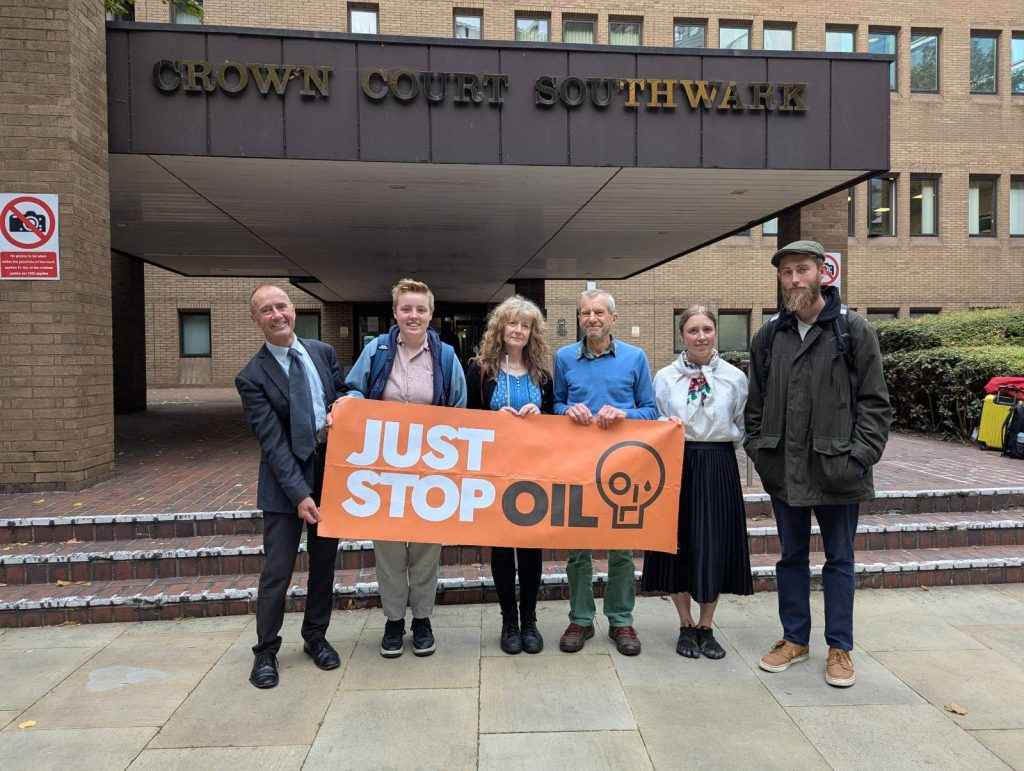
In July 2024, Roger Hallam sits in the dock for two weeks. The Crown Prosecution Service accuses him and four other Just Stop Oil activists of «conspiracy to cause a public nuisance». The case stems from a protest action two years earlier: dozens of activists had climbed the gantries of London’s M25 motorway and hung banners. Traffic was gridlocked for four days, hundreds of thousands of drivers were delayed, and the police estimated the cost at £1 million.
Hallam himself had neither planned the action nor stood on the gantries. He had, however, joined a Zoom call and encouraged listeners to participate in what could become «the largest disruption in modern British history». Unbeknownst to him, a journalist pretending to be interested in participating in the protest recorded the conversation and handed it to the police – then was the first to report on Hallam’s arrest.
Despite the looming consequences, Hallam remains calm. He had always expected that the state would eventually act harshly against him, as he recounts today. Just a few months earlier, he had narrowly avoided a prison sentence for an action at Heathrow Airport, which even his XR colleagues had deemed too risky.
Climate activists in the United Kingdom risk a great deal: they are nearly three times as likely to be arrested as the global average. Since 2022, the police is allowed to prevent loud and disruptive protests and road blockades before they even occur. The new offence of «public nuisance» can carry a sentence of up to ten years.
Political sociologist Graeme Hayes, who attended Hallam’s trial, recalls: «At the time of Roger Hallam’s trial, the courts were already a hostile space.» For a few years, British courts no longer permitted defendants to justify their actions on the grounds of climate change.
When the judge rejects Hallam’s request to present climate evidence to the jury, Hallam refuses to leave the witness stand. «I had sworn to tell the truth,» he recounts. «When the judge told me to be silent, I said I had to continue speaking.» The judge does not appreciate this. He calls the police into the courtroom and has Hallam taken to a prison cell.
At the sentencing, the judge tells the five defendants that they had «crossed the line from concerned activists to fanatics». Hallam receives five years, later reduced to four – the longest sentence for a non-violent protest in the United Kingdom since the Second World War. Internationally, the verdict draws sharp criticism; the UN Special Rapporteur on environmental defenders calls it «a dark day for peaceful environmental protests».
Hayes also views the sentence as repressive. Even disruptive protest is part of a functioning democracy, he emphasises. By denying the defendants the chance to justify their actions before a jury, the state further restricts the freedom of assembly and protest. «The government should not be able to decide what disruptions are acceptable and what are not,» he says. «In terms of protests, the United Kingdom has become more authoritarian.»
From street protest to deliberative democracy
The climate justice movement has become noticeably more cautious. The voices of activists have not fallen silent, but civil disobedience has become too risky for many – even Roger Hallam is subject to strict probation conditions. Yet he remains politically active: writing, networking, training others, and focusing on a process in which randomly selected citizens deliberate on important issues and make decisions.
Hallam wants to disrupt less and listen more.
He starts small, in the Brixton neighbourhood of London. After weeks of door-knocking, his team invites local residents to a meeting in early November – with tea, cake, and moderated small-group discussions. «Cake always brings people in,» he tells me with a grin. To his surprise, over 130 people show up, eager to get involved. They discuss concrete proposals, such as how to reduce homelessness rather than simply displacing it to other areas, and submit these proposals to the local council a few weeks later with a deadline for response. Meanwhile, Hallam collects donations in the neighbourhood shops to fund further meetings and push the campaign forward.
If the group in Brixton succeeds in getting the council to implement their proposals, it could spark similar citizens’ assemblies in other parts of London or across the country – allowing the network to grow exponentially. At least, that is how Hallam envisions it.
His strategy echoes the early days of Extinction Rebellion: back then, the core group organised around 1,000 public meetings to recruit people to their cause. These participants then self-organised, planned actions, and created a far-reaching network. Extinction Rebellion also called on the UK government to establish a citizens’ assembly on climate issues.
Citizens’ assemblies are not a new concept: they existed in ancient Athens and are today used as political experiments in European or Brazilian municipalities and cities, sometimes to develop climate policy measures. The new socialist party Your Party, led by former Labour leader Jeremy Corbyn and MP Zarah Sultana, is also adopting this concept to offer disaffected Labour voters a grassroots democratic alternative.
At the founding conference in November in Liverpool, members selected by lottery were able to decide on the party’s direction and organisational structure. Their resolution: a council of ordinary members will lead the party, while only a few politicians will take on public roles.
Hallam wants to go a step further. His vision of deliberative democracy cannot be squeezed into existing political structures. He sees it as a third path to power, alongside traditional elections and civil disobedience.
The revolution begins
Hallam draws a clear distinction between rebellion and revolution: rebellion remains within the system, revolution overturns it. Rebellion alone is no longer enough, he says. Neoliberalism has destroyed collective action. «We are heading for mass death because people in our culture act ethically only when they expect a personal or political gain.» He gestures widely, leans forward, and seems completely convinced of every word.
His alternative relies on citizens’ assemblies with randomly selected, representative people, much like juries in court cases. People with very different life experiences – from single parents to teachers to business owners – are meant to talk and listen to one another, reducing polarisation.
In these assemblies, participants are not just expected to set political proposals and priorities, but to make decisions. Hallam believes that one day this model could be applied at all levels of politics.
In his current campaign work, Hallam deliberately shifts his focus: away from a purely climate narrative towards a broader critique of the system. «We start where people are at and gradually they build up into the broader issues of climate and democracy,» he explains. Many people are currently struggling with rising rents or food prices. Yet Hallam believes that extreme weather events – such as the deadly floods in Valencia in autumn 2024 – could wake Britons up and trigger wider political mobilisation once such events occur closer to their own communities.
Citizens’ assemblies could then play a central role, quickly mobilising people.
The model is ambitious, and above all idealistic. Hallam is nonetheless convinced that it enables genuine political participation while also nurturing fresh talent for public office. Over time, citizens’ assemblies could evolve into citizens’ councils and movement parties, capable of mobilising strong candidates and winning elections. Established «corrupt and elite» structures would lose influence as a result.
Trust and engagement grow in this community-based approach – until the citizens’ councils demand official recognition from the state.
And if the regime simply ignores their demands? Then it must be overthrown, Hallam says: through mass demonstrations, general strikes, boycotts – a broad pro-democracy movement in which civil disobedience plays a role.
Hallam and Boardman pursue this dual strategy with their new movement, Rev21. They do not see themselves as competing with existing movements, but as a unifying structure in an international network of climate activists, which includes Just Stop Oil, Act Now (formerly Renovate Switzerland), and Neue Generation in Germany.
Cécile Bessire, co-founder of Act Now, met Hallam in early 2024 at a network meeting in Paris, where he presented his vision. In discussions, he appeared attentive and reserved; in presentations, he was enthusiastic and determined. «He is primarily a thinker and strategist. My impression is that he shares his ideas with as many people as possible and sees who follows him», she says.
It remains to be seen how the citizens’ assemblies will take shape in the long term and who will actively shape them. Hallam believes, however, that legitimacy and engagement will grow once people experience being heard.
Why doesn’t Hallam stop? This question runs through his life. Is he a dreamer who goes too far – someone who simply cannot do otherwise?
As Hallam sees it, a revolution always begins somewhere. Someone has to start it – and when in doubt, that someone is him.
Article by Sabrina Weiss (text) and Claudia Gschwend (photos), December 23, 2025, originally published in Republik.