🫖 The Hidden Power of Rituals
Rituals hold the power to reconnect us, resist the pressures of modern life, and build meaningful communities.
I want to dive into something that’s often overlooked but holds immense potential for personal and collective transformation: rituals. It’s easy to dismiss them as mere traditions or repetitive actions, but when we look deeper, rituals offer a way to connect, heal, and resist the pressures of modern life. In the podcast, I explore how rituals—big and small—are more than just routines. They have the power to shape our experiences, create solidarity, and even offer a form of resistance against the alienation that so often defines our world.
Through ritual, we find space to be present, to let go of the relentless drive to produce and perform, and to reconnect with something deeper than ourselves. Whether it's the simplicity of gardening, the act of passing bread to a neighbour, or the communal moments that arise in protest, rituals allow us to break free from the constant demands of neoliberalism and reclaim something that feels more human.
I’ve come to understand that rituals don’t just happen—they are created. And in a world where we are constantly pushed to produce more, be more, and perform more, they might just be the rebellion we need. Let’s take a look at how rituals can shift our perspectives, expand our sense of community, and help us build a more meaningful, connected existence.
Listen on Spotify, Apple, Soundcloud or wherever you get your podcasts. We've worked to improve the prison phone sound quality and each episode will come with a newsletter transcript and video version on Youtube for reading along.
Episode 7 - Rituals
This is the last of our episodes on aspects of the nonrational before we take this big leap I've been talking about. Ritual seems to be on the other side of the rational from emotion and suffering. With emotion and suffering, it's as if this supposed rational mind of ours is overwhelmed with the drama of being. The surge of emotion comes through us. The suffering seems to destroy us, and yet we find ourselves growing through the process. Getting lost leads to being found.
Ritual, as I'm going to discuss, seems to do the opposite. It leads the self. We escape from ourselves, as you might say. Ritual points not to drama but to its absence: an emptiness. But the revelation here, the paradox, is that in this emptiness there is something, though not a thing—or to put it another way, it is a thing, but it's not a thing at the same time. I'm reminded of the situation we discuss in physics, where there is an empty space, but in some vital sense, it is not empty. There is a sort of thing going on there.
We don't need to fear the emptiness then. We can lose our ego, and when we do, we don't cease to be, because the crucial realization is that we are not just our ego. There is something else that we are. This is not some big drama-enlightenment thing. The realization is rooted in our everyday empirical observations, what we have been doing in these episodes: just looking and seeing what is actually going on.
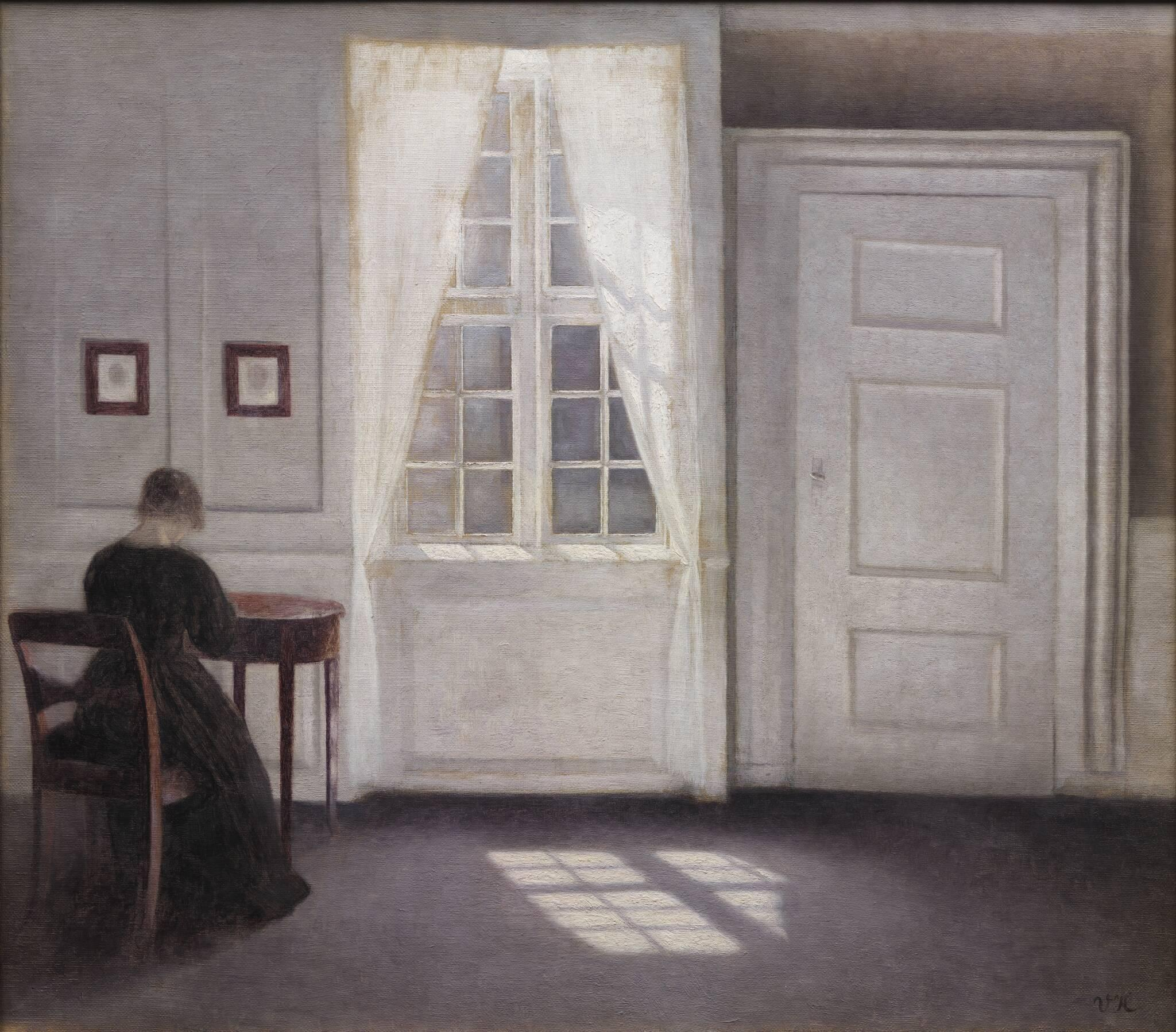
Ritual, then, is about the everyday, not the big events, big ceremonies, big initiations. It is rooting what happens in between the official occasions—what does not get noticed by the conventional way of seeing. The space between the nodes, between the supposed real things. For instance, making dinner, going to the loo, clearing up, closing the curtains. Around all the pressure of this ego that we are supposed to protect.
There is a world of stuff that is just going on. I'm not going to give a definition of ritual but rather I'm going to meander around a bunch of things—or non-things—as slight provocations, provocations to get a sense of how ritual works and thus how there is an ecology of modes of being. So, when we come to maybe give up on this ego thing for a while as we go into the future episodes, we can know there are other places to be. It's not going to be all or nothing.
Maybe, as we go through this little tour, we can have visits—sitting there in the road—and that itself can be a ritual, I think, in itself self-sufficient. So, I'd like to say also, before I start, I based this episode on a few ideas from a book called Disappearance of Rituals.
Let's dive in then, with a well-known ritual: the Japanese tea ceremony. The main idea here, I guess, is that nothing is going on. It does not have a purpose beyond itself. The focus is on the form and the aesthetic. We find ourselves critical of it, maybe, like—what's the point? Isn't it a bit boring, nothing is happening? But, at the same time, maybe there is the idea of: aha, that is the whole point, and it's actually quite cool.
The tea is being poured. The tea is drunk. There are two people. They are connected in the presence of each other, but there is no communication. There is no having a mad natter or a gossip where you're not aware that you're having a drink. The opposite is happening. There is no communication, but in the absence of communication, there is not simply silence or emptiness. It's not boring, because there is something else going on in that silence—something beyond the ego.
I would also like to start with another introductory example. I've been reading about another Japanese ritual recently. The idea is: you choose some everyday item—a button, a coin—and you put it in a box. Then you paint the box and decorate it as nicely as you can, and then you give it to someone. They open it up, but the point is not what is inside it. The point is the box in which there is a thing. The thing is actually the container—the box. It is pointless to spend too much time on the box, but that's the whole point.
There's something about this I like—something about the ritual destroying meaning. The oppression of a surplus of meaning. The heaviness of expectation and points to something without meaning, or beyond it. It's mysterious, which is kind of amusing. It creates a curiosity.
And moving outside, maybe. So, let's meander around a bunch of other happenings or practices. Let's move outside for a bit. Leading on from the box example, there seems to be something about ritual which is not about production—making stuff, and lots of it. It is not about the rational mind working things out, getting things done as such. It undermines the core ideology of neoliberalism, the system of meaning imposed upon us: that it's all about production. Producing stuff, and more and more of it—overproduction, in fact.
This might explain why ritual is disregarded and made invisible in our culture—because of its subversive quality. In the present context, ritual has been described as being at home in the world. This is the opposite of what the regime wants. It wants us to have a feeling of lack, of unfinishedness, of having still to get things done. So, ritual, in contrast, is about presence. Paying attention. And repetition.
Things in themselves. Activities that we are in the routine of doing, that don't go beyond themselves. You do them in a sort of flow, like how you might do gardening. It does not go anywhere. The weeds come back. The beds get scrapped. Winter kills everything. It can feel quite dispiriting at times from a "getting things done" point of view—like, what have you got to show for yourself?
But in another sense, that's the whole point, isn't it? It doesn't actually go anywhere. Here we are, just sitting there, pulling weeds out. You might say it's my personal ritual. Weeding has been a big part of my life, but I cannot show you anything for all that effort. There's just a field, like it was before—which is nice, in a way. I'm not under the weight of some achievement.
What we have then, in ritual, instead, is an emphasis on beauty, aesthetics, art, or just manners. We have symbol, rather than a communication of something. The ego is a bit lost by all this, but again, that is the whole point.
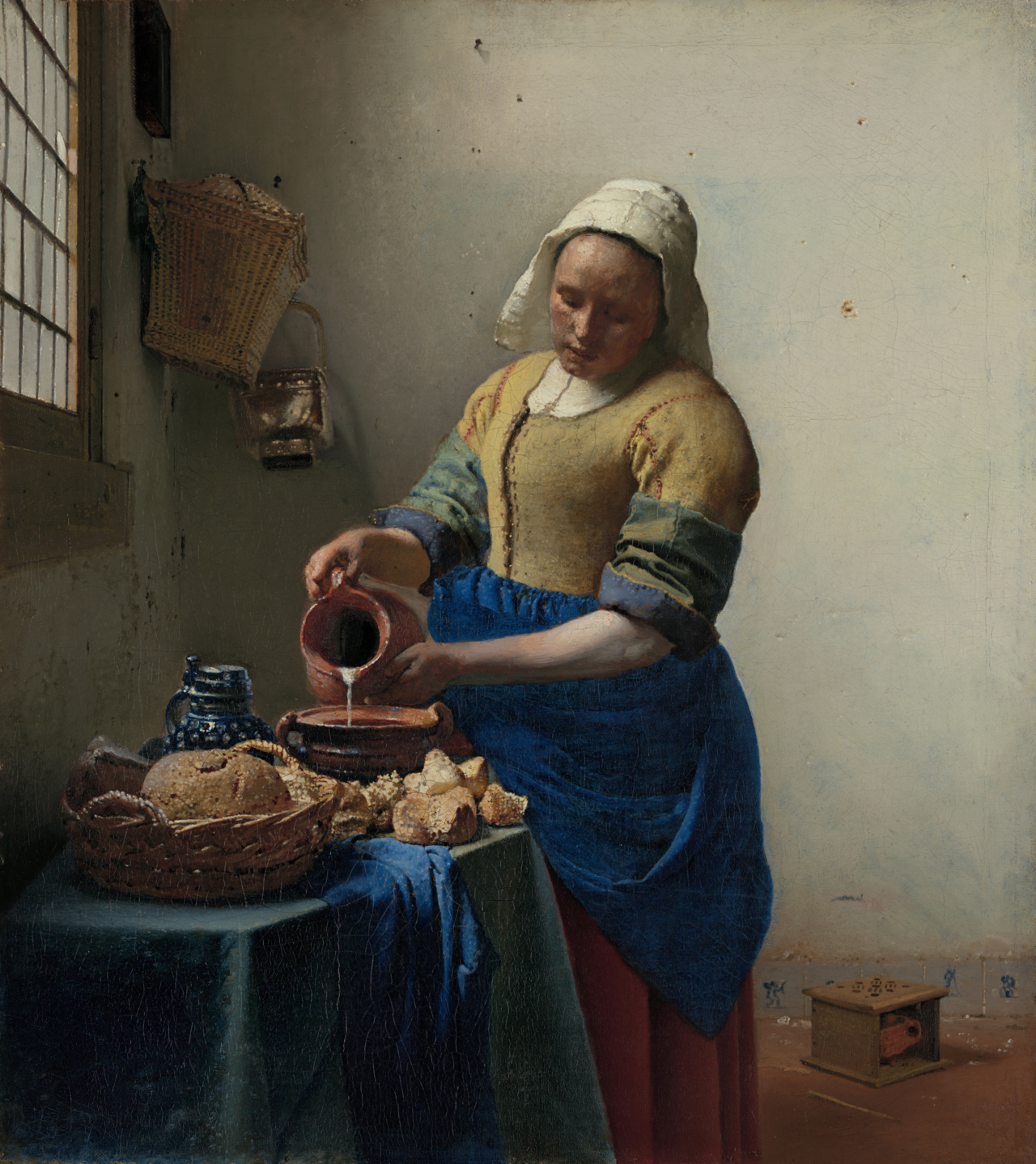
This is not about production. And an added richness is when this nonproductiveness is done in a social context—when it becomes an act of coming together. Like the breaking of bread. You take a piece of bread and pass it on to the next person. It might be more efficient for everyone just to have a piece of bread put on their plate. But such a production point of view cannot see something else—what is actually really going on.
Which is the connection created by the giving of the bread to the person next to you, and the repetition of this act over and over again, going around in a circle. The sense of being at home is not the creation of the conscious ego. It does not come through thought but through the ritualistic movement of the body in the presence of other bodies doing likewise.
Feeling at home in the world, then, has to do with acting with others—not about being alone.
This then connects with a rejection of the idea of personal, individual authenticity—what might be called the production of self. Trying to make ourselves into something, into a thing, a product. Something we have to feel good about, defined as something we can sell or promote to others. All this is seen as the essence of neoliberalism, the new modern regime.
So, it is not so much our labour that is being exploited, but rather us—we are taught and pressured to exploit ourselves. To make ourselves into something. To continually reproduce ourselves, to be better and more authentic.
This supposed authenticity of the self, then, is not the transcendence of the self. It is, in fact, the exact opposite—it is a doubling down on our obsession with the self. Self-care, then, becomes really the narcissism of the self.
This is especially true in a social media context, where young people are pressurized into being obsessed with who they are, how they look, with being a product. This is the enemy of the social. The enemy of real community. The engagement in acts of service with others—a leaving of the self behind.
Promotion of the self is the opposite of ritual. Instead of everything being reduced down into content or intensity, there is this focus instead on a form. An escape, for a while, from the weight of self-expectation.
And in this emptiness, ironically, we see so much more. There is this re-enchantment of a world that comes into being—not having to know, not having to have everything tied down, but simply participating in the world.
Ritual, then, can be associated with play. It is free. It is not the factory for the production of things—or the production of selves. Instead of the obsession with the self, we escape by putting on a face, by doing an act as in art. There is no set communication or discourse.
In the festival of play, there is no oppressive big point to it at all. Like in sport—it is important without being important. The rituals of the football match are real enough without any claim to be important in some serious worldly way. After all, all that is happening is that a ball is being kicked around. But it’s also obvious that is not all that is happening. It makes sense without having to have some big rationale about it.
This play can, however, become what the French thinker Georges Bataille calls strong play. We can take the sense of play into the ritualising of more serious competition—the debate, the duel, the traditional ritualization of warfare in a premodern context. The fight between two champions. The ritual somehow gives a meaning over and above the violence itself.
This is very different from the brutality of modern warfare, as a question of production—where it is all about which side can produce the most stuff that can kill the most people. To Bataille, there is always what he calls a surplus that has to be expended—a surplus of energy, or a production, but also of meaning.
We can use ritualistic competition as an alternative to the destruction through violence. Resistance, then, can be seen as a way of doing away with the surplus. Maybe more people would enter into resistance if it was ritualized, made into something which did not have to have the heaviness of this excess of meaning—which becomes a form of strong play.
I am reminded here of the confrontation between the Black rights resistance and the police in Birmingham, Alabama, in 1963.
One of the Black organisers approached the officer running the police operation during the Birmingham protests in 1963 and suggested they take a break for lunch. Both sides agreed, and they all paused for an hour. This simple act broke the logic of production—the reductive materialism of modern political struggle. Instead, it opened up a space for humanity, for play, for humour, even. It reminded everyone of their essential communality, much like the football games played in no-man’s-land during Christmas in World War I.
These acts—breaking the expected rhythms of conflict—are often presented by the ruling ideology as meaningless or, worse, as transgressions. But, in fact, they are among the deepest forms of resistance. Ritual resists the reduction of life to one flat plane, to the tyranny of a rational justice that sees nothing but itself.
Ritual is not just idle play on the margins of what is deemed “important” or “real.” It can stride into moments of greatest intensity—into life’s transitions, and even into death itself. In the agony of grief, ritual provides a kind of insulation. As one saying goes, ritual “insulates the skin from the atrocious burns of suffering.” It protects us from the harsh habits of being. Without ritual, we are unprotected, exposed to life’s rawness.
This protection is not about producing something tangible. Ritual doesn’t build physical walls or create material artifacts. It offers no rational explanation. It is not about the mind, psychology, or words. Instead, it responds to the void of life’s pain in a physical way, through action. The black clothes, the funeral march, the burial. These acts are “doing something without doing something.”
It all helps. Not because it provides closure—closure is a myth. Closure cannot exist when the wound of grief is so profound. If anything, reason only makes grief worse. The solace of ritual comes not from what it produces, but from the doing itself.
This brings us back to the foundational idea of promoting form over content. Ritual, like art, creates a surplus of meaning that cannot be fully explained. A poem is more than the sum of its words; a witticism is more than its logical meaning—it is simply funny.
When I listen to a Martin Luther King Jr. speech, for example, I’m swept away by its sound and rhythm. It’s not just what he’s saying—it’s how he says it. Immanuel Kant, the philosopher, apparently disliked music because it had no set meaning, no clear utility. But that is precisely the point. Music takes you away. It is intense and transformative, but its meaning resists reduction to words.
The same is true for visual art. When we see a glorious work of art, we can try to describe it, but it’s like running on the ground when you need to be flying through the air.
The world, when we truly look at it, is full of rituals in the widest sense of the word. Life, as they say, goes on. There is an endless and irreducible thickness to it—a ground beneath all the dramas of our egos. Even in the mundane—like doing the washing up—there is ritual.
Even when ritual is denied or dismissed, it slips back into our lives. Materialists—those who think the world is only about power and refuse to see anything transcendent—still find themselves up to their ears in ritualistic behaviours.
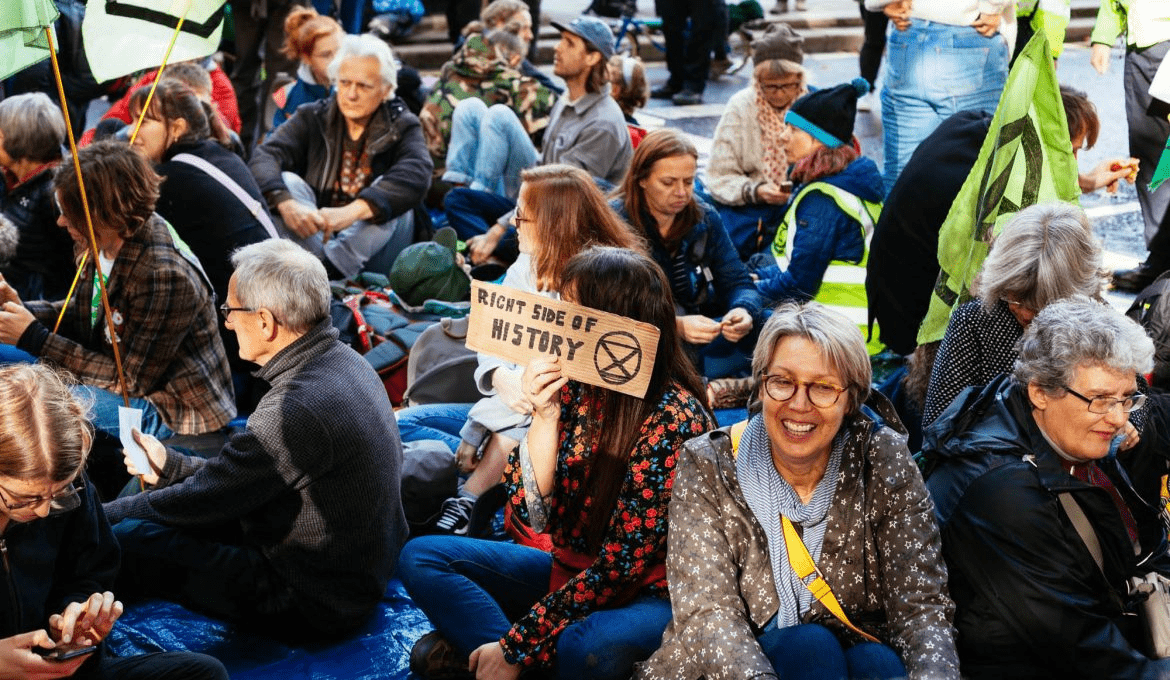
The Russian communists had their rallies, parades, salutes, and all the pomp—the dressing up and showiness. But the essence of true ritual lies in its subtlety. Ritual cannot be declared, frosted upon the multitude, or dictated. Some of the Extinction Rebellion ceremonies, at its peak, felt a bit like that: "And now we are going to have a ceremony. Alright, jump to it."
Ritual, at its best, is something that slips gently into the social space it inhabits. It is there to be felt and acknowledged, not imposed. It is the lubricant of social connection, not the glue. This brings us to the pouring of tea in Japan. The act is not about making a grand statement of generosity or gratitude, or some moral lesson. It is about politeness—a ritual governed by rules, but not weighed down by virtues.
This doesn’t mean ethics and virtues are unimportant. Life, of course, cannot just be about pouring tea. But part of life should be about pouring tea. Life is about truth, yes, but it is also about myth. Conversations are about information and argument, but they are also about banter, gossip, self-deprecation—a way of bringing each other up and down. They are play. A sport.
Within the protection of ritual, we are shielded from life’s raw edges. Ritual prepares us for the hardships to come.
Returning to the spirit of revolution and resistance: I write this from a prison cell. To say so is already a reduction, an abstraction that sanitizes the experience. Being in a cell is not just a singular reality—it is a complex matrix of mini-rituals. Getting food. Having a nap. Putting up postcards on the wall. These rituals give meaning to confinement, threading it into the broader fabric of life.
Strangely, writing the text for this episode has been calming for me. Perhaps even hearing about ritual can itself become a kind of ritual. Most of the ideas here are not my own—I claim no originality. But maybe they help expand the world for you, just a little.
There is more out there than this narrow, flattened reality we’ve been told is all there is. As we prepare for resistance, it’s good to think expansively. Ritual reminds us of the vastness of life and how real it all is, as real as anything else. And when we find ourselves in the cell, or wherever life places us, we can still have our rituals—big and small.
As always, you can work with me on democratic revolution globally at rev21.earth.
If you want to get involved in the assembly movement in the UK, join an upcoming Welcome to Assemble talk.