Who Is In Control?
Why progressive parties keep failing the communities they claim to represent
You can listen to the audio version of this article, narrated by Robin, here or wherever you get my podcasts.
The Green Party was founded in 1972 (originally as the "People's Party" and later as the "Ecology Party"). 53 years later, an all-borough party meeting was recently held in London. Around 50 people showed up. All were white apart from two people, and we can guess a similar overwhelming majority were middle class rather than working class. After five decades of claiming to speak for the common people, obviously something is amiss.
I want to make clear this article is not a cheap critique of the Greens or any other left or progressive party. Thousands of people are passionately dedicated to the cause and work very hard. But at this time of a threat to the very existence of pro-social politics on both sides of the Atlantic, we have to be honest with ourselves: passion and hard work, while essential, are not sufficient to stop the far right.
In the same week as the Green Party meeting, I was involved in a launch meeting for a community independent candidate for the local elections in one of the wards of that borough. A similar number of people came along, but there were several key differences. This event was for people in only one of 25 wards in the borough — hyper local. The organising group had been going not fifty years but just a few weeks. And most significantly, the majority of people in the room were people of colour and/or from migrant communities; over half were working class, and many had not been to a political meeting before.
Why? First, because people in the community were invited in a concrete, real way — over 200 posters were put at the ends of roads in the ward, a team of people knocked on doors for several evenings, and others spoke to local shop owners and community groups. Second, what was on offer was paradigmatically different to the playbook of the neoliberal political parties. People in the community would be choosing both the candidate and the programme. Again, this difference was concrete and real.
Many thousands of words have been written about how to empower and involve marginalised and alienated communities in the political process, and no doubt many important points have been made. But there is a towering fundamental question: who is in control? You or them?
Be honest. The vast majority of "solutions" proposed during the last few decades of the neoliberal era make all sorts of offers, but not the offer of control. This is the essence of the neoliberal conceit: you are free, but only as long as you are not actually in control. The "offer" is a transaction — we offer "this" to you. The "this" can be all sorts of things, but it is always controlled by those making the offer. Marx's foundational critique was that if you do not control your labour, you are alienated. Likewise, if you do not control your politics, you are also alienated. Both relationships violate our essential humanity.
For decades, supposedly radical and progressive political spaces have been saying: do as we say but not as we do. We want you to be in control, but actually we will keep control. The radical message is contradicted by reactionary practice. Over the past few months I have had many conversations with left and progressive people about all this, and more often than not the reaction is exactly that — reactionary. "But if we allow people to create their own programme, what happens if it goes against our values?" "Why don't they just join our party?" Notice the word "our". What matters is "our" power, not their power. Our truth, not their liberation.
This is what a neoliberal party does: it is a gatekeeper of political power. It says you can choose, but we decide on your choices. The divine right of kings has not been abolished — the aristocratic proposition that "we know best" has simply been secularised. This is not democracy. It is not rule by the people. The people in that ward meeting came along because they sensed — just maybe — that real, actual democracy could be on offer.
You are free, but only as long as you are not in control. That is the neoliberal conceit.

This is not only a matter of political ethics and democratic principles. It is also a matter of solid realist strategy. No progressive party is going to win by playing the neoliberal conceit going forwards from 2026. The game is up. The far right have already broken the mould — they lie, they shout, they entertain, they do not pretend to be "good". They offer an escape from liberal pretension. A fantasy world is preferable to a political class that insults people to the point of madness. Fascism is an outcome of that madness.
If the progressive and left space is to create a realistic alternative, it too has to break the mould. It has to leave the collapsing centre by offering not an escape from reality, but a genuine reimagining of it. A real, no-nonsense means by which people actually control politics: the people decide the candidate and the programme. They are in control not as a rhetorical fancy but as lived reality. This is what democracy actually means.
It is essential, of course, for new leaders of the left like Zohran Mamdani and Zarah Sultana to create the vision and make the arguments in the public sphere. But let us be absolutely clear: unless a real democratic strategy is in place — not to take power but to give that power away — all their words will be yet more castles in the air.
People think all this is difficult and complicated. It's not. The difficulty is making the decision. The decision to be democratic rather than aristocratic. The decision to allow the political to emerge from the social, not the other way round. The decision to make the community sovereign. For the political party to return to its origins as a political club. You are no longer making a capitalistic transactional offer. You are entering into a relation of social solidarity — an act of service to the other. This is the paradigm shift.
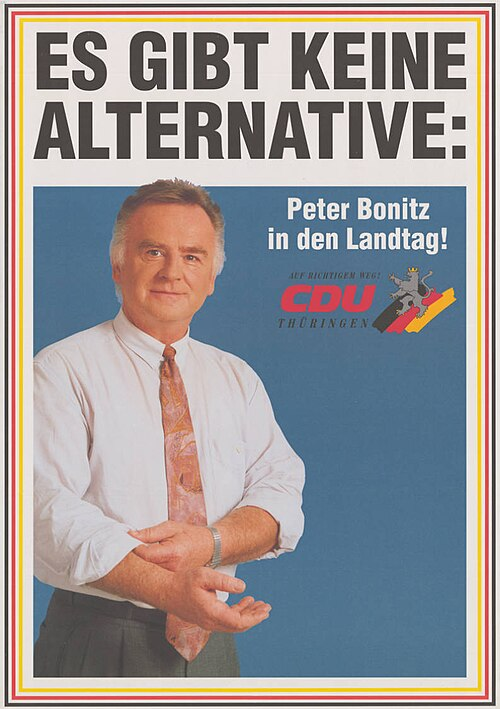
Obviously there are many details to be worked out, and they are being worked out. Our movements and their community organisers have the knowledge and the capacity. Real democracy is not new; it is simply waiting to be re-enacted. Over the coming months and years, this shift in how we see the human will constitute the next great pro-social revolution. It is the alternative to fascism. There is an alternative.
In the face of the cascading political shocks we are now seeing, surely we can all agree that nothing is more important than building that alternative.
SOURCES
- Chantal Mouffe, For a Left Populism (Verso, 2018). Mouffe argues that the liberal left's abandonment of popular sovereignty opened the space the right now occupies — the theoretical backbone of the gatekeeper argument made here.
- Karl Marx, Economic and Philosophic Manuscripts of 1844, trans. Martin Milligan (various editions). The original source of the alienated labour argument. A readable modern introduction is the Stanford Encyclopedia of Philosophy entry "Marx's Theory of Alienation"
If this political moment feels like a dead end, that's because it is — my new book Suicide names it. From the structural failure of liberal democracy to the legal and moral case for resistance, this is the argument the mainstream won't make.