From the Impossible to the Inevitable
On rationality, rent strikes, and why the pre-revolutionary moment demands something different
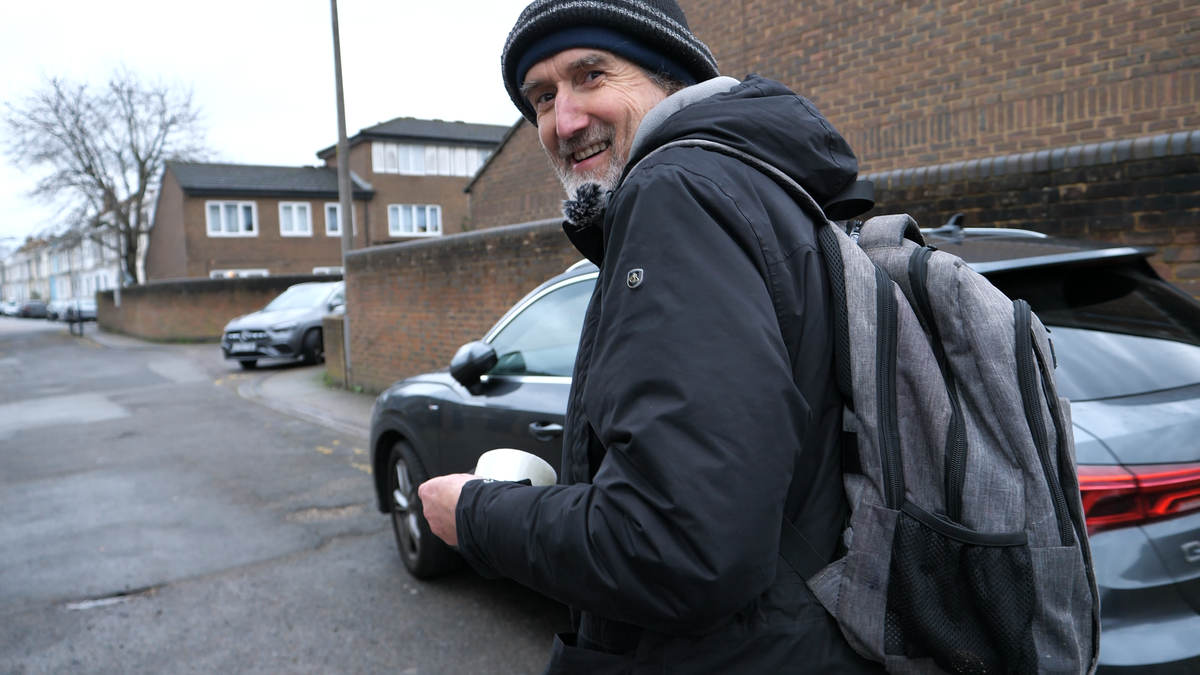
Another scene from pre-revolutionary Britain. I am knocking on doors along a pleasant London terrace. A lovely woman is talking with me about homelessness. She happens to be a local Labour councillor and knows all about the issue. She helps out with a homeless charity and does all sorts of good works. All good. And then she says in an expert tone, "You see, the problem is structural". My brain goes: "absolutely, that's why we need structural political change". But she does not mean that at all. She means it's "structural" and so no real change is possible. We can only do what amounts to "charity".
These opposite reactions reveal the gaping chasm between the neo-liberal "left" paradigm and a (neo) traditional socialist position - a political distance far greater than the "left" and "right" versions of neo-liberalism, which offer different words and the same policies. And this chasm reveals the particular sense of vertigo that characterises our present political context. Everything feels stuck. Everyone wants change. Something has to give.
The origin of the Labour councillor's neo-liberal position is a particular cultural notion of "rationality" - the quaint idea of the "collective action problem", which is a piece of right-wing propaganda wrapped up as social science. The originator was Mancur Olson, whose 1965 book The Logic of Collective Action argued that individuals pursuing self-interest in groups will tend to free-ride on others' efforts, making collective provision of public goods structurally irrational. The idea that it is only "rational" to take action to achieve a public good if sufficient other people act to the extent of being able to secure that good. The problem is that this "rationality", as Anthony Downs had already "discovered" in his 1957 An Economic Theory of Democracy, leads to irrational outcomes - including the famous conclusion that no rational person should ever bother to vote, since the chance of one vote changing anything is so close to zero as to make the cost of turning out irrational. Facing this inconvenient truth, these professional rationalists did the irrational thing and decided not to believe what they did not like. They stayed calm and carried on. The collapse of social solidarity in Western societies has been the entirely predictable result.
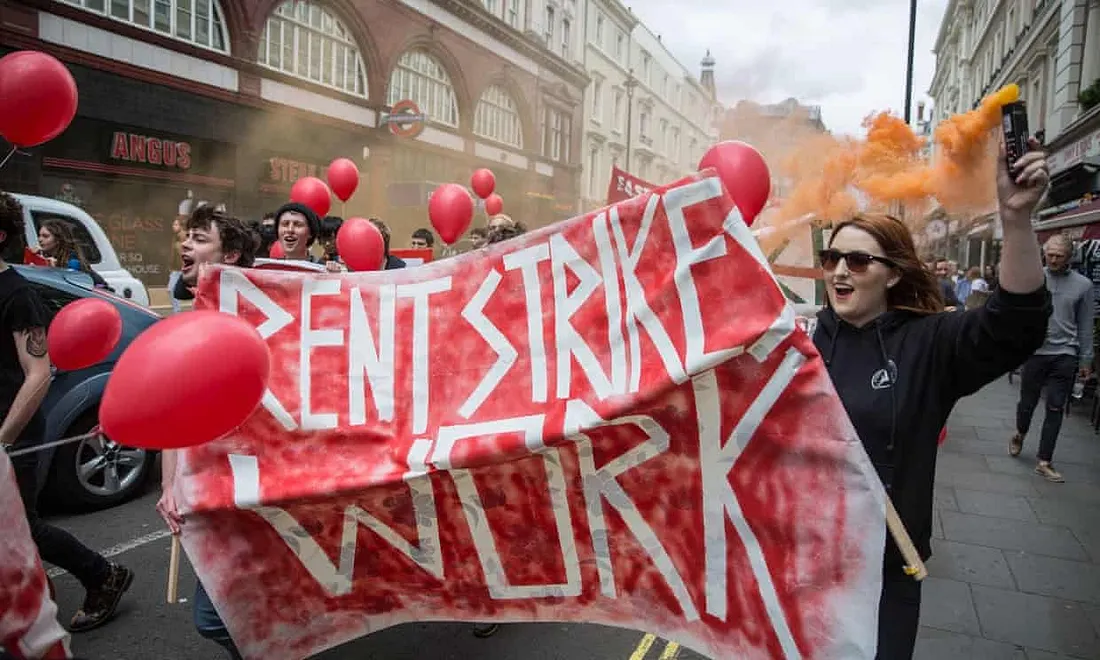
Not everyone, though, is a professional irrational rationalist. A few years ago, I did the design work for the first rent strike in London for several generations. At the first public assembly, a room full of students was asked to decide in small groups what the percentage rent reduction would be, based on demand. A small group of organisers and I in the room were "educated" enough to understand that "structurally" it would not be "possible" to get more than a 5% rent cut, if that. But, having heard that the landlord made an extortionate 50% net profit on the accommodation which they owned outright, the tenants decided it was "only right" that the demand should be a 50% cut in the rent. History is not driven by sophistication or "rationality" - it is driven by naivety informed by common sense morality. Enthused and motivated by the simple rightness of their case, 10,000 people stopped paying their rent and achieved a historic win.
This is actually how most people still think - it's just that such people never get into the public sphere because it is a space of "rationality". When I get put in prison, inmates come up to shake my hand, not because they have done a rational analysis on whether civil resistance "works". Their life experience has shown that working out what works is a fool's game. They just think that going up against the system to the point of getting banged up is a cool thing.
Coming back to the homelessness issue, I have just spent several weeks asking people to sign a petition on London streets. Around four times as many women sign it as men. And four times as many young and working-class men signed as educated, middle-class older men. One reason is surely that being male, "educated" and middle class - being in the administrator class that serves the neo-liberal machine - involves an obsession with what "works", meaning what is "possible". Obviously, for these men, signing a petition is not going to sort out homelessness - they look at me with dismissive contempt.
When I mention the campaign to these "left-wing" men, they will immediately jump to "solutions" - a deceptive word that suggests a technical objectivity but actually hides its ideological bias of "what is possible", meaning what capitalism will allow. As one of them put it, "Roger, you have to be empirical about this". But empiricism comes up with two opposite results at the same time: first, that only what is possible is possible, and second, that the impossible sooner or later becomes inevitable.

This reminds me of the major work "Nationalist Mobilisation and the Collapse of the Soviet State" by Mark Beissinger. In his first chapter, called "From the Impossible to the Inevitable", he ties himself in epistemological knots trying to explain in social scientific terms how this process happens. The social science contradicts social science. It turns out that the superstructure can turn the tables on the infrastructure. Any structure is no more than a human construct, a set of beliefs. It is unchangeable only to the extent that people believe it to be unchangeable. People believed bringing down the Soviet regime was impossible, and then they decided instead that it was inevitable, and so it became inevitable.
Being human is intrinsically paradoxical. Rationality can only take you so far, as people have been saying for a long time - Blaise Pascal, the French mathematician and philosopher, being one worth starting with. Perhaps we can put it this way:
In reformist periods, the possible is still possible. In pre-revolutionary periods, the possible has become impossible. In revolutionary periods, the impossible becomes inevitable.
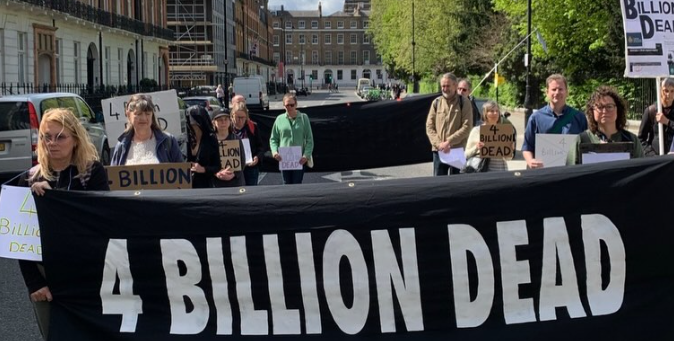
We are in a pre-revolutionary period. The world's most famous climate scientist, James Hansen, recently confirmed that 2°C is now locked in - a circumstance that, according to a recent UK insurance industry report, is likely to destroy at least two billion lives. And while we are waiting for this final demise, everyone in the know knows that AI is about to destroy hundreds of millions of jobs within the next few years. In other words, what everyone wants to stop cannot be stopped - "structural", in the sense the Labour councillor meant.
As usual, the radical right has got with the programme. Their "irrational" approach is to throw everything at the wall and see what sticks. Our approach then needs to be to throw love at the wall and see what sticks. What does this look like? Well, a good example might be Zarah Sultana's statement that everything should be nationalised. Ridiculous? Or maybe not.
If this political moment feels like a dead end, that's because it is — my new book Suicide names it. From the structural failure of liberal democracy to the legal and moral case for resistance, this is the argument the mainstream won't make.